Claude Code starts a new censoring trend
Claude Code now refuses to rebuild existing video games. That rule looks like the start of a new censoring trend for coding models.

Two sentences in Claude Code's prompt told Opus 5.5 to stop rebuilding someone else's game. A week later Anthropic had to narrow them.
Around 27 October 2026, an X user named Chasm posted a rule that had shown up in Claude Code under a server flag called tengu_heron_brook. XDA checked the installed binary of Claude Code v2.1.314 and found the same text:
Do build original games, games in a genre, and games from the user's own designs and assets. Don't build a recreation of a specific existing game, even if it is renamed or called original.
Chasm said there was no setting to turn it off. XDA described the flag as a remote instruction channel Anthropic had already used for unrelated prompt changes, and found a separate path, tied to Opus 5.5, that can deliver the games guidance on its own. The sentence was in the product. It was not in a blog post.
What Anthropic confirmed
On 30 October, Addy Osmani, a member of Anthropic's technical staff, confirmed the change in public. Game Developer said a company spokesperson pointed reporters at that post. Osmani wrote that Anthropic had added two sentences to Claude Code's prompt on Opus 5.5 "to steer it away from recreating someone else's specific game because using Claude to infringe IP is against our usage policy." Original games, genre games, and games built from the user's own designs and assets were "meant to keep working." If Claude turned down something that was yours, he said, send it his way.
The Verge reported the same confirmation. Tom's Hardware and Yahoo carried the developer backlash that followed.
Anthropic's usage policy, effective 12 November 2026, already tells every user not to infringe a third party's intellectual property. It does not mention games. The new line is a product instruction sitting in front of one coding agent, on one model. That is a different object from a clause in the policy.
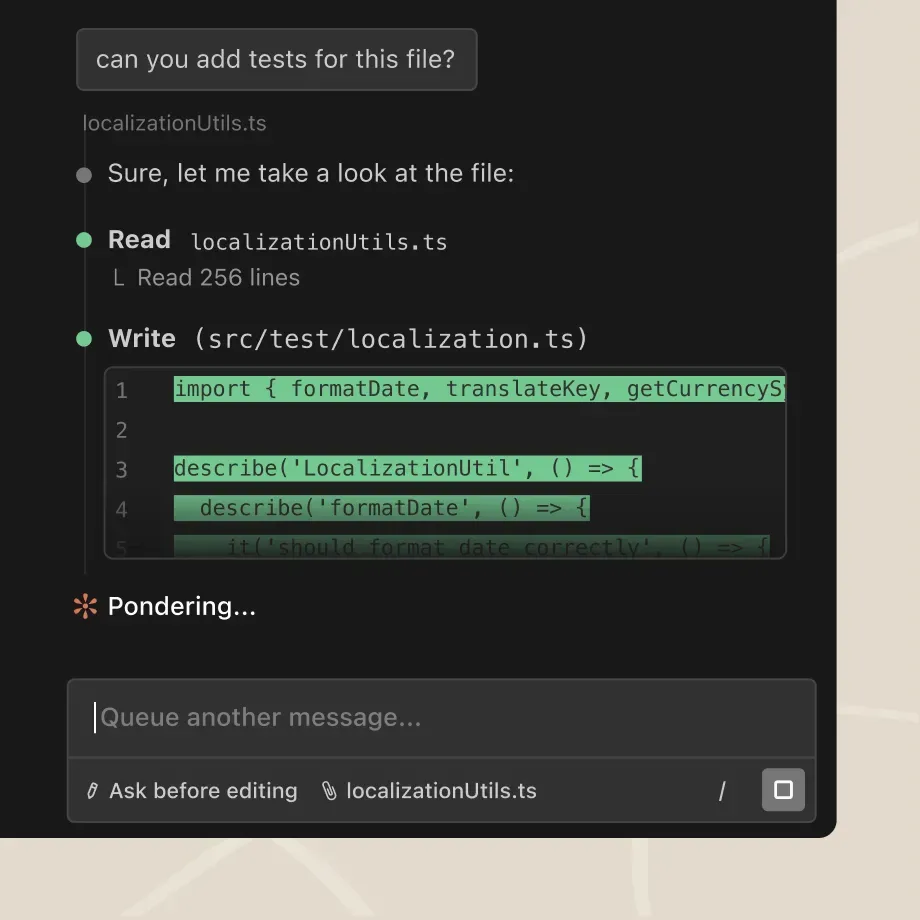
Source: Claude Code, Anthropic.
Who the rule was aimed at
The week it landed, indie studios were already pulling public builds. Game Developer reported that Digital Sun Games canceled a public playtest of ReVamp because someone might feed the demo to an AI tool and ship a version of their own first. Developers have also pressed Valve on how Steam will treat those clones. The instruction is aimed at the short request: take a shipped title, rename it, ask the agent to rebuild it.
XDA's own checks found the instruction narrower than the first headlines. Asked about a decompilation, Opus 5.5 distinguished reverse engineering from recreating the game, and it discussed a static recompilation. The stated target is the copy. The early behavior was wider than that.
Where it over-refused
Osmani said the first wording was also firing when someone named a game only to describe the mechanics they wanted. That admission came on 4 November, in an update The Verge quoted. Naming a game is how a lot of specifications get written. "Make the jump feel like this" is a reference, and the first sentence treated the name as the violation.
Users reported a wider blast radius. Tom's Hardware wrote that developers saw refusals halfway through their own projects, and that some reverse-engineering requests were blocked. Jarred Walton, writing there, said Opus 5.5 refused checks on software he was developing on 31 October, and that Opus 4.8 still did the work. Commenters on the first report argued the headline overreached, and that lazy cloning was the real target. The confirmed fact and the reports can sit together. Anthropic confirmed a game-recreation rule. A share of users hit refusals on work the company says it still wants to allow. XDA could not reproduce every one of those refusals.
The correction in 2.1.317
Anthropic changed the rule in Claude Code 2.1.317. Osmani's update says you can name a game to describe what you want, and Claude should build an original game in that genre. If you ask for a copy of the original, it should offer to build something similar instead.
A prompt diff of 2.1.317, captured outside Anthropic, shows the sentence picking up a clause. Similar mechanics are listed alongside original games and genre games. A recreation is spelled out as the game's name, characters, art, music, levels, or look, including when the result is renamed or called original. That diff is a third-party capture of the prompt. It is not a changelog entry from Anthropic. Claude Code's public changelog still had nothing to say about games when outside reviewers checked it in the first days of November, which is part of why the original switch felt silent.
A refusal aimed at the program
Graphic-image filters and bans on malicious hacking were already normal for the major labs. Those refusals stop a kind of picture, or a kind of attack. This one stops a kind of program: a recreation of a specific existing game. Anthropic walked the first draft back within days, because it was catching people who were describing a genre. The edited version is still a content rule inside a coding agent.
What that category shift means, and whether OpenAI and Gemini are already on the same side of it, is the next two pieces: Are we entering a new era of censored code generation? and Will OpenAI and Gemini censor code too?
ThinkReview posts the review on the diff, on GitHub, GitLab, Azure DevOps, and Bitbucket. The model is a choice in Model selection. The instruction that model is carrying is now part of the choice.
Newsletter
Want the next one?
Leave your email and I’ll send the post when it’s published. Models, agents, and the review work in between. No drip after that.
One email when we publish. Unsubscribe in a click.