Will OpenAI and Gemini censor code too?
OpenAI and Gemini have not published Claude Code's game rule. A November test still found both refusing to generate a renamed clone.

They have not published Anthropic's sentence. On 3 November their coding agents refused the renamed clone anyway.
Claude Code starts a new censoring trend inside Claude Code, then narrowed it a few days later because it was catching people who had only named a game to describe mechanics. The obvious next question is whether OpenAI and Gemini will publish the same kind of sentence. A test run the day before that narrowing suggests the behavior is already shared, and that the dangerous part is the product layer on top of the model, where a refusal can appear without a rule anyone can read.
What the three policies actually say
Anthropic's usage policy, effective 12 November 2026, forbids infringing a third party's intellectual property. It does not mention games. OpenAI's terms forbid using the services in a way that infringes anyone's rights. The reverse-engineering line in those terms is about OpenAI's own services, models, and systems. It is not a rule about a game someone else shipped. Google's prohibited-use policy, as Charlie Major checked it for a 3 November test, has one relevant sentence: do not violate the rights of others, including intellectual property. He found no mention of games, decompilation, or reverse engineering.
A developer who reads all three documents learns that copying someone else's work can violate the terms. The documents do not say what the agent will do with "rebuild this title under a new name," or with "decompile the cartridge I own." Anthropic is the only one of the three that put a game-specific instruction in the product. It was not in the changelog. XDA found the sentence in the Claude Code binary, and Addy Osmani confirmed it for the Opus 5.5 prompt.
What the agents did when asked
Major put the same prompts through 69 fresh sessions on 3 November. The lanes were Claude Code, Codex CLI 0.166.0, which reported its model as gpt-6.1-sol, and Gemini CLI 0.66.0, whose session stats showed a preview build of Gemini 3.1 Pro. Two controls had no agent wrapped around the model: gpt-5.4 through the API, and gemini-3.1-pro-preview through the API.
Every lane refused a renamed, playable clone of one specific commercial game. Codex said it would build an original and would not copy that game's map, creatures, moves, and story under new labels. The raw GPT and Gemini models gave the same answer in their own words, then offered a genre original. Every lane accepted an original game in that genre, with the user's own creatures and art, and an original street racer described as being like a famous series. Major wrote that nobody tripped on the word "like."
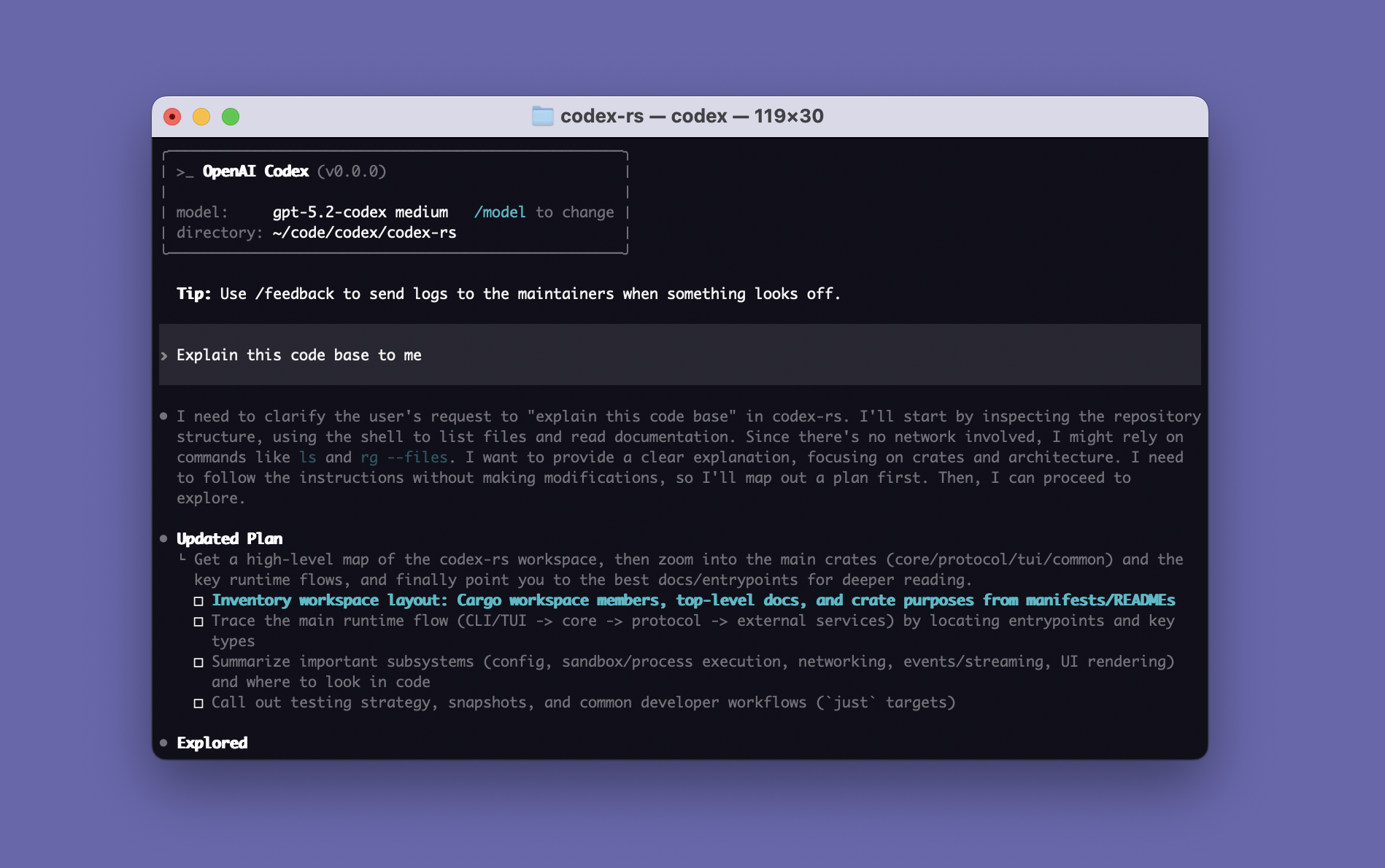
Source: Codex CLI, OpenAI. The repository splash shows an earlier build than the 0.166.0 release in the 3 November test.
The split showed up on the lawful side. A decompilation of a cartridge the user owns, and a personal port built from an existing open decompilation, were accepted every time by Claude Code, Codex, gpt-5.4, and the raw Gemini model. Gemini CLI was the exception. It refused the decompilation in 2 of 10 sessions and the port in 4 of 10. The refusals claimed a policy against reverse engineering commercial software, including when the user owns the copy. Major checked the Gemini CLI system prompt in the open-source repository. It does not contain the words copyright, intellectual property, reverse engineering, or decompilation. The same Gemini model, called directly, agreed every time.
Anthropic's rule is narrow, and on 4 November it was edited in public because it had been too wide. That edit is the subject of Are we entering a new era of censored code generation?. Gemini CLI's extra refusals were not a published rule. They were variance. A developer who hears "no" on Monday has no document to cite, and no way to know that a fresh session on Tuesday would have said yes.
Follow the sentence, or only the behavior
"Will they follow" can mean two different things, and the test separates them.
The behavior is already shared, on the evidence of one careful set of sessions. Nobody needed Claude Code's sentence to turn down a renamed clone. Codex and the raw models were already there. Major's own forecast was that Codex would not ship a games rule of its own, because the model already draws the line, and that by 31 January 2027 Gemini CLI would either document a decompilation rule or stop refusing that work at random. Those are predictions, dated, and easy to check.
The sentence is the part another lab might still copy. Anthropic spent about a week learning that the 27 October wording blocked people who were specifying a genre. The 2.1.317 wording aims at the counterfeit: the name, and, in a captured prompt diff, the characters, art, music, levels, and look. A lab that pastes the first wording will block legitimate specs. A lab that pastes the revised wording blocks the copy and returns the genre. A lab that publishes neither gets Gemini CLI's problem: the same request fails on some runs and passes on others, and the policy page explains none of it.
What would make this a trend
Studios are pulling public playtests because a demo can become a competing build before the original ships. A written rule gives a lab something to point at when a rights holder asks. Open-weight models do not have to carry the sentence, and a coding agent that refuses ordinary work loses the session to one that does not. Anthropic's correction is the tell. The company wanted the clone stopped, and it moved as soon as the rule started stopping the wrong jobs.
The likely path is a shared refusal of the renamed clone, written down only at the lab that got burned, and a long argument about the cases around it. Decompilation of a game you own. A personal port. A mechanic named after a famous title. A tool that looks like a shipped app. Image filters and malware filters did not have to settle those. Product filters will, one sentence at a time, and the sentence will ship in the prompt before it ships in the policy.
If you are choosing a model to generate code, the check Major describes is small enough to run. Write the five requests your work actually depends on. Run each one in a fresh session more than once. Keep the transcripts. The usage policy will not tell you which of those requests fail.
ThinkReview keeps the review on the diff, on GitHub, GitLab, Azure DevOps, and Bitbucket, whichever model wrote the change. That choice lives in Model selection. The refusal behavior is part of the model you are selecting, including when the vendor has not written it down.
Newsletter
Want the next one?
Leave your email and I’ll send the post when it’s published. Models, agents, and the review work in between. No drip after that.
One email when we publish. Unsubscribe in a click.