Grok Bot vs Hermes Agent

Grok Bot vs Hermes Agent
One is a roster you message. The other is a runtime that writes down what it just learned.
Both will take a multi-step task, use a browser and a shell, remember you tomorrow, and run something on a schedule while you are away. The split is who owns the loop.
Grok Bot is a product. You download the app, name a Bot, and hand it work. The computer it uses sits in Cursor's cloud, so the job continues with the laptop shut. Access comes with paid Cursor plans and with SuperGrok. It launched in beta on August 11, 2026, first as an internal tool for sales follow-ups, ops, and bug reproduction, then as something subscribers could open.
Hermes Agent is a project you run. Nous Research ships it under MIT. The repository's pitch is a closed learning loop: it creates skills from experience, nudges itself to keep what matters, and can search its own past sessions. hermes model points the same agent at Nous Portal, OpenRouter, OpenAI, your own endpoint, or a local model. Nous also offers a business tier and an on-prem edition. The default is still something you install.
The computer
Grok Bot's computer is the feature and the boundary. The docs are plain about the sharing. Every Bot on your account uses the same machine. Browser sessions are shared. Files are visible to every Bot. Command-line credentials are shared. One Bot can pick up a file another Bot saved. Each Bot has its own screen, so a second Bot can browse while the first is in a terminal. Those screens are one account's computer.
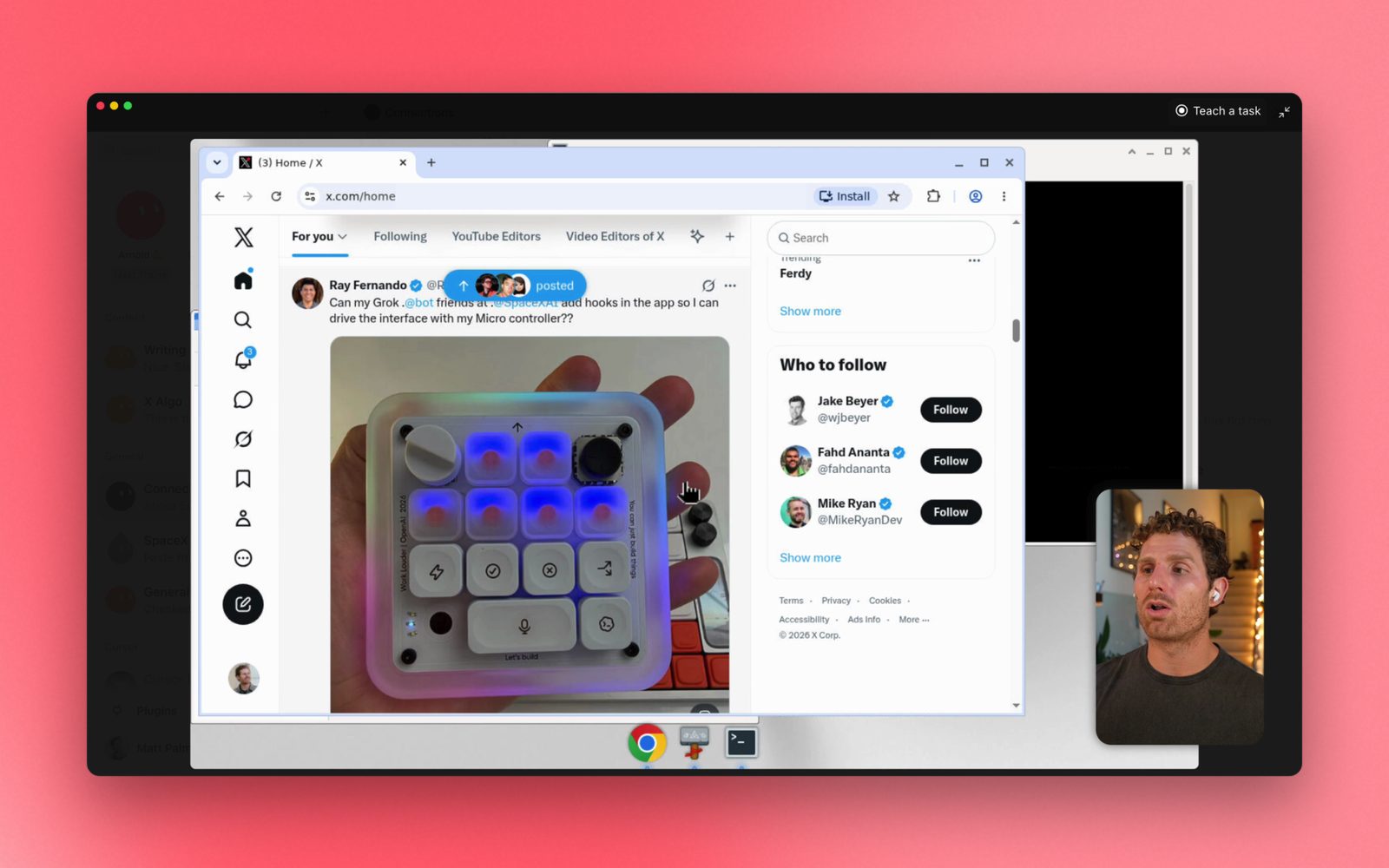
Source: Grok Bot 101, SpaceXAI.
That is why a Grok Bot roster feels like a small team. It is also why a credential you drop on that machine is a credential for the roster. The Mac or Windows machine in front of you stays separate, and a Bot touches it only when you have turned that on and approved the command.
Hermes puts the computer where you put the process. The documented backends include local, Docker, SSH, Singularity, Modal, Daytona, and Vercel Sandbox. Daytona and Modal can hibernate, which is the hosted version of "my laptop is closed" without handing the disk to the model vendor. A five-dollar VPS is a supported shape. So is a GPU box. The agent can spawn subagents with their own terminals, and it can collapse a pipeline into a Python script that calls tools over RPC, so the model does not have to narrate every step.
If the work is three named teammates sharing a login, Grok Bot already built that shape. If the work is "this VM is the only place the tokens live," Hermes is the one with a backend list.
What each one keeps
Grok Bot keeps a Bot. The name, the memory, the files, and the skills you taught by walking it through the path. A Routine is a standing job: a morning brief, a watch on a topic, something that fires on an event. The transcript is where you see what ran.
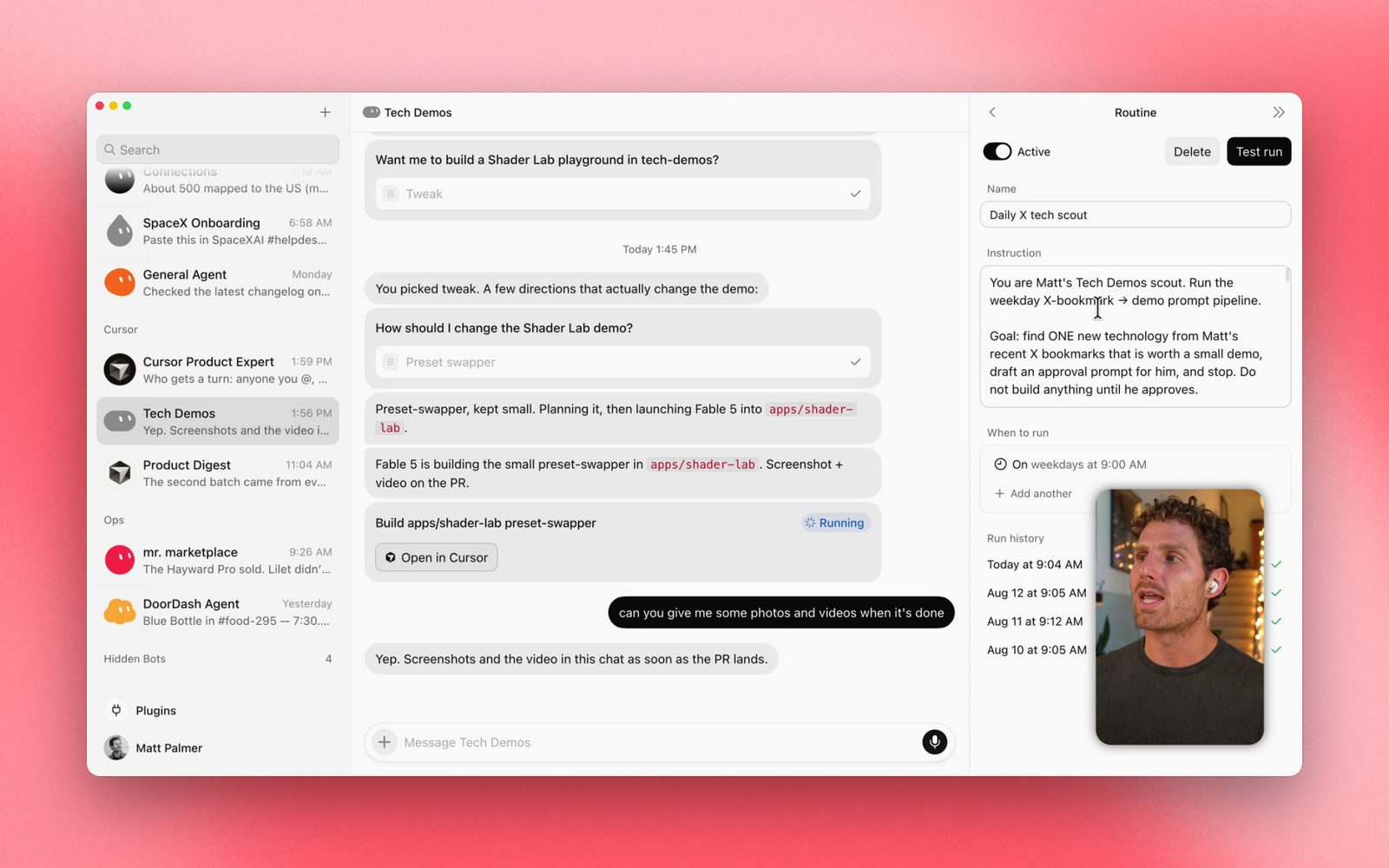
Source: Grok Bot 101, SpaceXAI. The routine is a weekday scout that drafts a prompt and waits for approval.
Hermes keeps procedures. After a complex task it can write a SKILL.md, and that skill is available the next session. Memory is deliberately small: a MEMORY.md and a USER.md injected at the start, plus search over past sessions when the small files are not enough. The learning is the headline. A workaround you accepted once can become the procedure. skills.write_approval exists so those writes wait. The default does not wait.
Grok Bot learns a path you performed. Hermes learns a path it performed, then edits the writeup. One of those is a recording. The other is a coworker updating the runbook while you are in the next meeting.
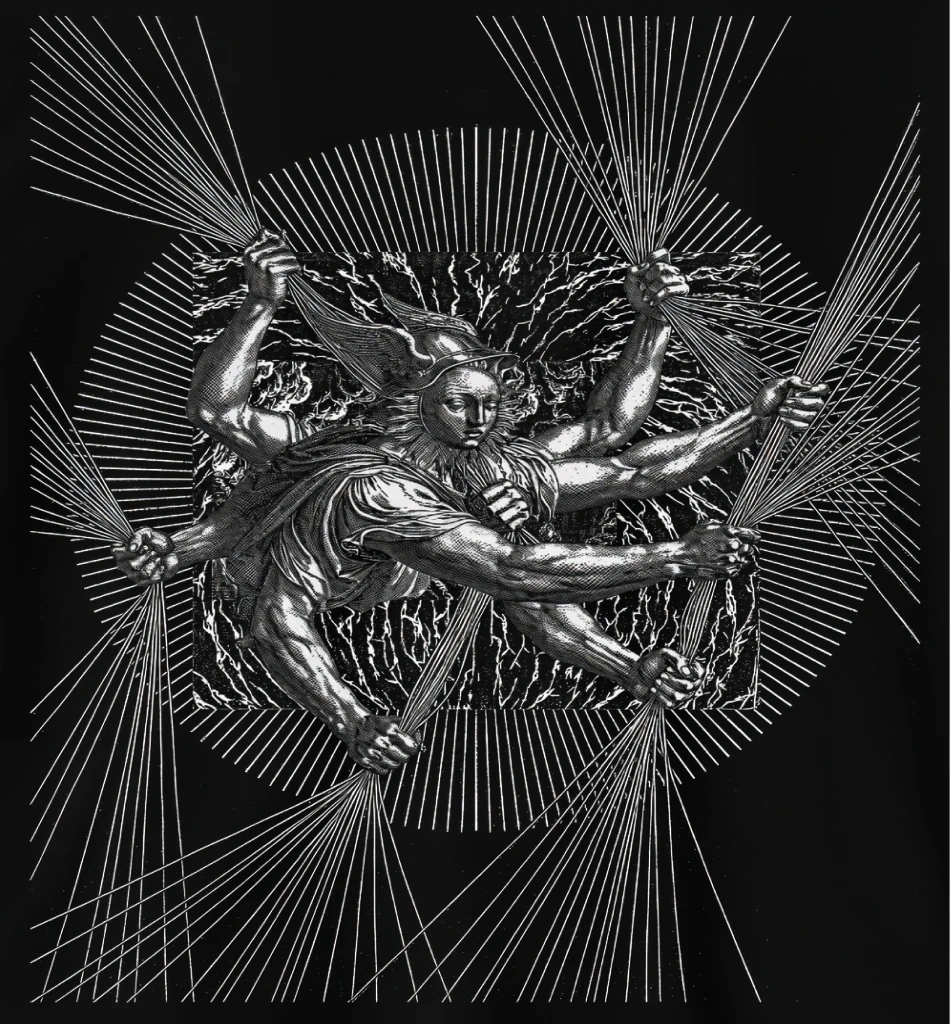
Source: Hermes Agent, Nous Research. The product behind the drawing is a terminal, a desktop app, and a gateway.
The model, and the lock-in
Grok Bot is Grok. The quality of the teammate moves when the model moves, and the usage sits on the Cursor or SuperGrok plan. There is no model-switch command. The simplicity is the point of the product essay: five nouns, and the model stays underneath them.
Hermes is the harness. The October 13 release, v0.22.0, will run open models locally if they fit the machine, and it will call a hosted model when you would rather pay for the quality. Switching models does not mean migrating the skills. That is the trade. Grok Bot's skills assume Grok's habits. Hermes's skills are markdown on disk, and the model reading them can change on a Tuesday.
The same release shortened the first launch. A desktop install with no API key opens a setup chat on a free trial model, then offers connectors into apps such as Linear and Notion. It is still your process after that.
Which one to open
Open Grok Bot when you want a named teammate this afternoon, on a computer you do not have to patch, and you are already paying for Cursor or SuperGrok. The roster, the shared desktop, and the phone app are the product.
Open Hermes when the agent has to live on a machine you control, the model has to be swappable, or the thing you want to accumulate is a skill file you can read. The install is the price of that control.
The wider map is in Is Grok Bot the present of AGI?. The other open runtime is OpenClaw.
A pull request is a third shape: a diff, a finding, a person who merges. ThinkReview is built for that page, on GitHub, GitLab, Azure DevOps, and Bitbucket.