Is Grok Bot the present of AGI?

Is Grok Bot the present of AGI?
The computer stays on. The name stays. The intelligence is still the model underneath.
For a year, an "agent" was a chat that could call tools until the window filled up. You came back to a new thread. The login was gone, the files were gone, and the method you had just taught it was gone with them.
Grok Bot is SpaceXAI's answer to that. It launched in beta on August 11, 2026. A Bot has a name, a job, and a computer in Cursor's cloud: a browser, a filesystem, and a terminal. It keeps working after the laptop closes, and it comes back when a send or a payment needs a person. The design note is explicit about the object. Chats are disposable. The Bot is what you return to.
That is a real product change. It is the present of agents. AGI is a different sentence, and the docs for these products are about computers, skills, and approvals.
Three ways to keep the computer on
Grok Bot is the hosted version. Hermes Agent and OpenClaw are the versions you run.
Hermes Agent is Nous Research's open-source runtime, under the MIT license. The loop is the product. After a hard task it can write a skill, refine that skill the next time, and keep a small memory of who you are. You point it at Nous Portal, OpenRouter, OpenAI, your own endpoint, or, as of the October 13, 2026 release, a local model through llama.cpp. You talk to it from a terminal, a desktop app, or from Telegram, Discord, Slack, WhatsApp, and Signal.
OpenClaw is the gateway. Peter Steinberger published the first version in November 2025. The name moved from Clawdbot to Moltbot to OpenClaw on January 29, 2026, after the Claude pun met a trademark complaint. In February he joined OpenAI, and stewardship moved to the OpenClaw Foundation, an independent nonprofit. OpenAI is a donor. The project stayed MIT, with no paid tier, and the state lives on hardware you choose. One Gateway process sits between the chat apps you already use and whatever model plugin you attach.
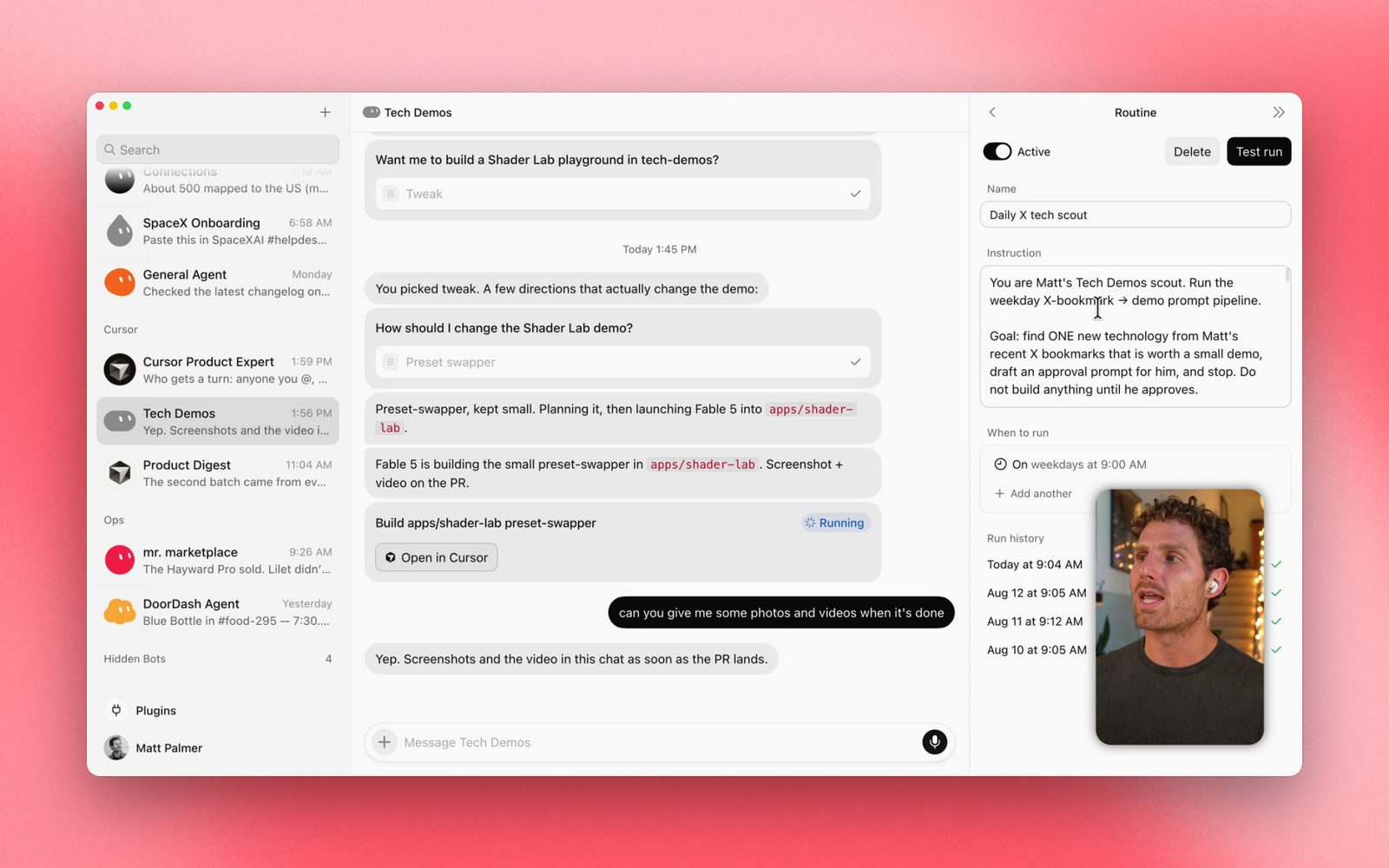
Source: Grok Bot 101, SpaceXAI. A named Bot, a standing routine, and a run history.
| Grok Bot | Hermes Agent | OpenClaw | |
|---|---|---|---|
| Who holds the computer | Cursor's cloud, shared by every Bot on the account | A machine you pick: laptop, VPS, Docker, or a sandbox that sleeps | Your laptop, a homelab, or a VPS |
| What you open | The Grok Bot app | A terminal, a desktop app, or a chat | WhatsApp, Telegram, Slack, iMessage, and the rest |
| What compounds | A named Bot, its files, and a skill saved from a walkthrough | Skills the agent writes from the work | Skills you install, plus a workshop that can draft new ones |
| The model | Grok | Any provider you configure | A plugin you can swap |
Meta's Muse, launched September 8, is the consumer-scale version of the same idea. That comparison is its own post.
What these systems actually learned
Grok Bot learns a path by being shown it. Walk a Bot through a job once, it saves the path as a skill, and a Routine can run that path on a schedule. The docs also say your Bots can message each other and hand a task across. The roster is the point. You stop being the person who copies context from one window to the next.
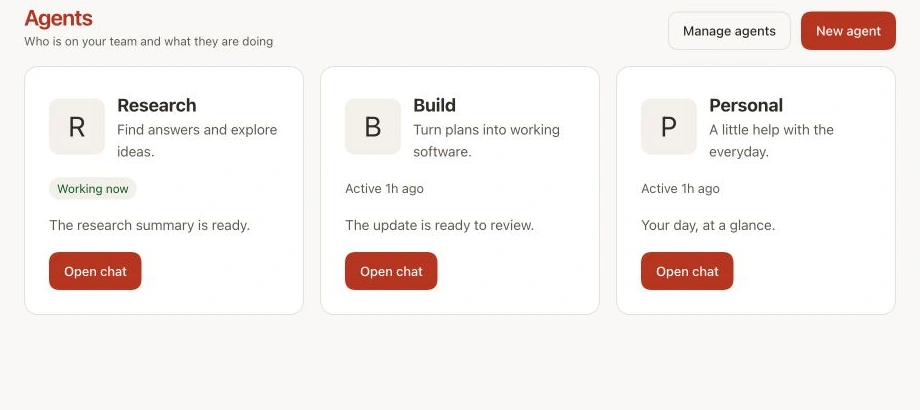
Source: OpenClaw docs. One gateway, several agents, separate sessions.
Hermes treats the skill as something the agent owes you after the work. The catalog is local. A correction you make on a messy task can become the procedure for the next run. That is the feature Nous leads with, and it has a cost: a brittle workaround can get written down as fast as a good one. There is a setting to stage skill writes for review. The default lets them land.
OpenClaw grew up as a control plane. Skills lived in ClawHub and you installed them. It now has a Skill Workshop, so an agent can draft a procedure and the draft can be held for approval. The gateway, the channels, and the policy are still the center.
Source: Hermes Agent, Nous Research.
All three store a method and replay it. Replaying a method is useful. It is a filing system for procedures, sitting on top of a model that still misses.
The gap the word AGI is papering over
A general system would take a job it has not been shown, invent a method that survives a second job, and carry the result when the method is wrong. These products store a method and replay it. That is the feature.
Grok Bot's computer page says every Bot on the account shares one machine. Cookies, files, and command-line credentials are shared. Each Bot gets its own screen. The screens are separate work surfaces, and they are one security boundary. A person still approves the sensitive step. The model is Grok, and a new Grok is a model release, the way 4.5, 4.6, and 4.7 were.
Hermes and OpenClaw put the machine in your hands, so the failure domain is yours too. The model is whoever you plugged in. Swap it and the agent is a different agent the same afternoon.
You can employ a named process that has a desktop, a memory, and a calendar. You still pick the model, you still approve the send, and you still read the result.
What to hand them this week
Give a Bot a morning brief, a bug you can watch it reproduce, a price check, a draft that waits for you. Give Hermes a workflow you will run again, so the skill has somewhere to go. Give OpenClaw the chat you already live in, and read the security guide before the Gateway is reachable past your own machine.
The comparisons are next: Grok Bot vs Hermes Agent, Grok Bot vs OpenClaw, and OpenClaw vs Hermes Agent.
A pull request is a narrower job than any of these. A diff, a finding, a person who merges. ThinkReview stays on that page, on GitHub, GitLab, Azure DevOps, and Bitbucket.