OpenClaw vs Hermes Agent

OpenClaw vs Hermes Agent
Both are open source, both sit in your chats, and they disagree about what the agent is allowed to change.
OpenClaw is a gateway that runs an agent. Hermes Agent is an agent loop that has a gateway. You can install either, point either at a model you pay for, and reach either from Telegram. The second day is where they separate.
Two open agents, two centers
OpenClaw is stewarded by the OpenClaw Foundation, MIT licensed, with no paid plan. Peter Steinberger started it in November 2025. It wore the names Clawdbot and Moltbot before it became OpenClaw on January 29, 2026. When he joined OpenAI in February, the foundation kept the repo. The Gateway is the always-on process: sessions, tools, events, channel connections, one port. Configuration is the difference between a personal assistant on a laptop and a shared deployment.
Hermes is stewarded by Nous Research, MIT for the agent, with a business tier and an on-prem edition for teams that want a shared skill library. The loop is the thing they put on the tin. Skills, memory, cron, and subagents hang off that loop. The October 13, 2026 release, v0.22.0, added a guided first launch, connectors, signed desktop builds, and a one-click local model runtime.
Source: openclaw/openclaw.
Reach, then the runbook
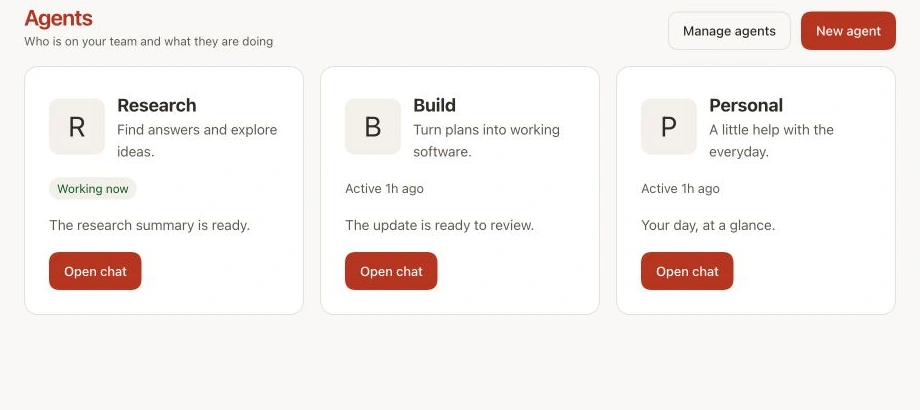
OpenClaw's advantage is the inbox. A single Gateway can sit in Discord, iMessage, Slack, Teams, Telegram, WhatsApp, Signal, and more through plugins. Mobile nodes add a camera and a screen. Routing isolates sessions by agent, workspace, or sender. If the requirement is "the assistant is in the chat the group already uses, and a second agent does not see the first agent's session," the gateway is the answer.
Source: OpenClaw docs.
The channel shot in the docs is still labeled Clawd, the name from before the rename. The product behavior is the part that lasted: you text it where you already text people.
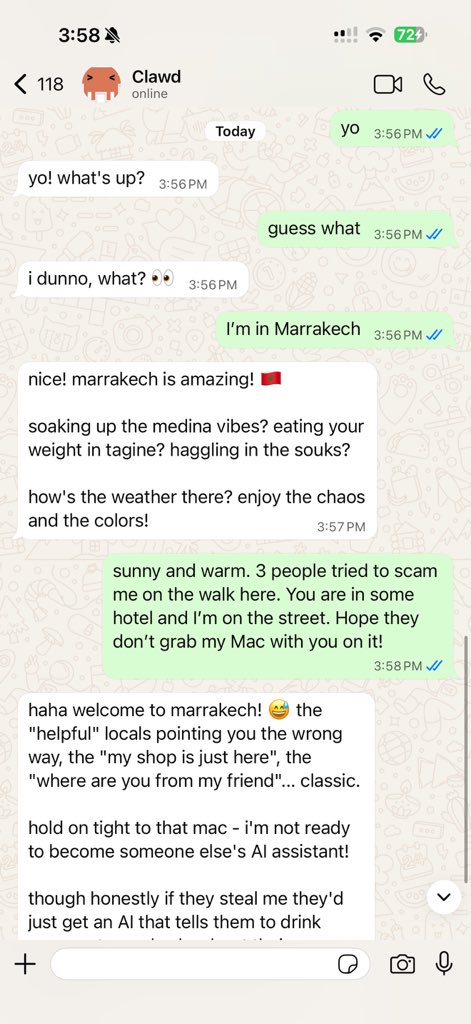
Source: OpenClaw docs. The contact name Clawd is the pre-rename brand.
Hermes's advantage is what happens after a task succeeds. The agent writes a skill, uses it next time, and can be told to improve the skill it already has. Memory stays bounded on purpose, two small files at session start, with full-text search over history when you need the rest. Subagents get their own conversations and terminals. A cron job delivers to whichever platform you configured. The messaging list is real — Telegram, Discord, Slack, WhatsApp, Signal, plus the terminal — and it is a shorter list than OpenClaw's.
People who have moved between them can take a persona across in one direction. Hermes ships hermes claw migrate, which imports an OpenClaw persona, memories, user-created skills, and selected settings, and it can do that as a dry run first.
Source: Hermes Agent, Nous Research.
How a skill is allowed to change
Both projects store skills as folders with a SKILL.md, and both speak the Agent Skills format, so a carefully written skill often moves.
OpenClaw grew a Skill Workshop around the write. A learned skill can land on its own, or it can sit as a proposal. The workshop scans before the live write, keeps the change inside workspace skills, and records enough to roll it back. ClawHub is where you install a community skill on purpose, and the install can check a trust envelope. The bias is that a procedure is a change, and a change should be visible.
Hermes grew the write first and the approval second. The agent creates skills after complex tasks, refines them during use, and the local catalog is the source of truth. Setting skills.write_approval stages every change. Leaving the default means the runbook updates itself. Skills Hub pulls from several registries, including ClawHub, and it scans what it installs.
If you are the only operator and you want last month's correction to already be in the skill, Hermes is the shorter path. If more than one person depends on the procedure, OpenClaw's proposal and rollback are the path that survives a bad Tuesday.
Where the process lives
OpenClaw wants a Node runtime and a Gateway you keep up. Desktop apps exist for macOS, Windows, and Linux. The default bind is loopback. Exposing it is a decision, and auth is required once you do. Sandbox the tools, or accept that the main session runs on the host.
Hermes wants a terminal backend. Local is the simple one. Docker, SSH, and the serverless options are there when the environment should hibernate or stay off your laptop. The October desktop release signs the packages, and the first launch is a setup chat that can run before you have an API key. Local models install llama.cpp and pick a build that fits the GPU.
OpenClaw's bill is the machine plus the model provider. Hermes's bill is the same, unless you take the business tier, in which case you are also paying Nous for the shared layer.
Pick the center you actually need
Pick OpenClaw when the product you want is the inbox: many channels, a foundation that does not sell a seat, and a skill change you can roll back. Pick Hermes when the product you want is the loop: a skill that appears because the work happened, a model command that swaps the brain, and a sandbox you can sleep.
How both of them sit next to the hosted roster is in Grok Bot vs OpenClaw and Grok Bot vs Hermes Agent.
Either one can open a repository. The review of the change is a separate page. ThinkReview reads the pull request you already have open, on GitHub, GitLab, Azure DevOps, and Bitbucket.